Role of Spunbond Nonwoven Fabric in Disposable Medical Products
November 17, 2026
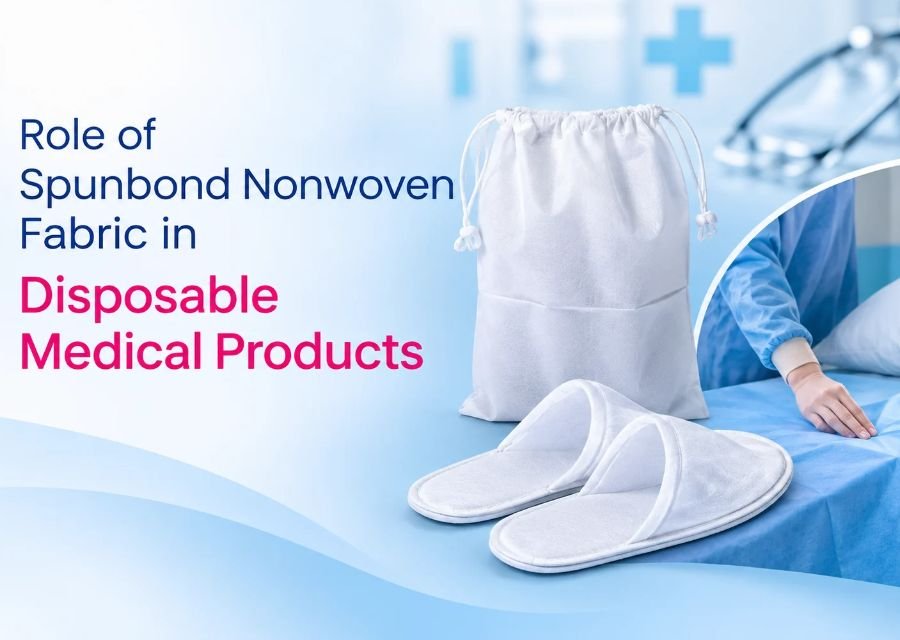
In disposable medical products, material choice is a deciding factor for strength, comfort, processability, barrier properties, and product uniformity. Spunbond nonwoven fabric is now commonly used because its filament-based nature allows engineers to create filaments with specific mechanical and functional properties.
Medical disposable producers cannot simply choose a cheap nonwoven material. They should choose a fabric that provides the required GSM, tensile strength, elongation, uniformity, breathability, and other characteristics.
Understanding Spunbond Nonwoven Fabric:
The spunbond nonwoven fabric is produced by spinning the thermoplastic polymer into filaments which are drawn, deposited, and bonded to produce the fabric.
This method of producing nonwoven fabric differs from staple-fiber in that the fabric has good web strength and is mechanically stable due to the continuity of the filaments.
Control of process parameters such as filament formation, web deposition, temperature, pattern, and fabric weight affects fabric properties.
Where Does Spunbond Fit in Medical Disposables?
Spunbond nonwoven fabric is used extensively across a wide range of disposable healthcare items, including:
- Surgical gowns and drapes – Providing a fluid-resistant barrier during operations.
- Face masks – Used as the outer and inner layers in surgical and N95-style masks.
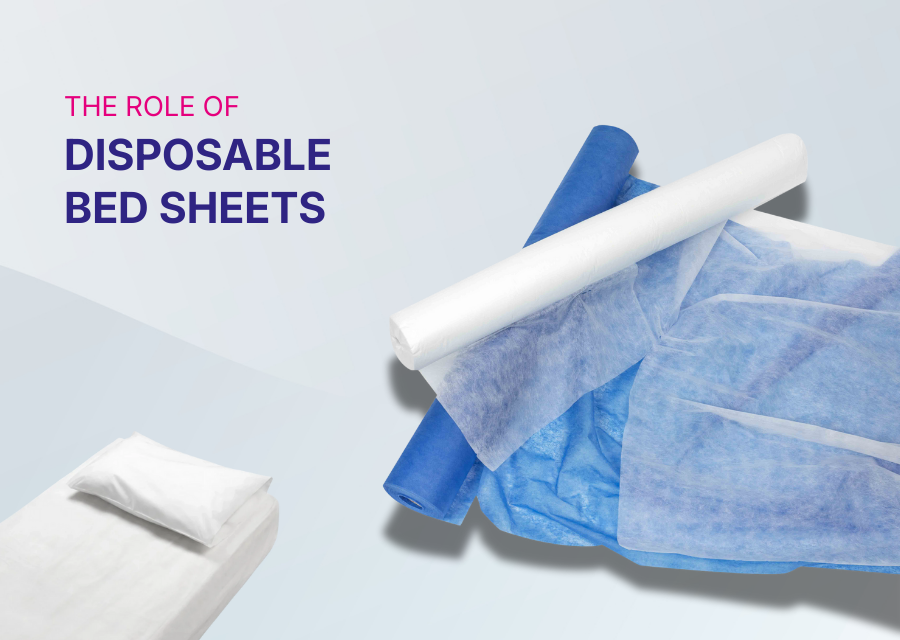
- Bed sheets and covers – Offering hygienic, single-use bedding in hospitals and clinics.
- Caps, shoe covers, and coveralls – Preventing contamination in sterile environments.
- Diapers and sanitary products – Delivering softness and leak protection in personal hygiene items.
Technical Parameters That Matter:
For medical-product manufacturers, evaluating fabric through technical specifications is more reliable than selecting material based on price alone.
| Fabric Parameter | Manufacturing Significance |
| GSM | Determines material weight, handle, and product construction |
| Tensile Strength | Indicates resistance to mechanical stress during use |
| Elongation | Influences flexibility and dimensional behaviour |
| Air Permeability | Important for breathable wearable products |
| Web Uniformity | Supports consistent performance across the roll |
| Bonding Quality | Affects fabric integrity and resistance to separation |
| Roll Consistency | Helps maintain stable downstream converting |
The required specification should always be established according to the end product, converting process, and applicable medical-product requirements.
Why Manufacturing Consistency Matters
A technically suitable fabric can still create production problems if its properties fluctuate between batches. The variations in GSM, tensile properties, bonding, width, roll winding, or surface uniformity can affect cutting, sealing, stitching, and automated converting.
In conclusion, nonwoven fabric manufacturers in India need to be evaluated not just on their catalog specifications, but also process control, batch consistency, quality control, and ability to manufacture according to application-specific specifications.
Choosing an Experienced Nonwoven Fabric Manufacturer
For healthcare applications, sourcing from established Non-woven Fabric Manufacturers in India provides access to technically controlled material suited to different converting requirements.
Spunweb approaches nonwoven manufacturing from a material-performance perspective, focusing on consistent fabric construction and application suitability. As a nonwoven fabric manufacturer, Spunweb supplies the material platform that downstream manufacturers can convert into products according to their own technical, regulatory, and application requirements.
Best Non-Woven Fabric Manufacturers in India – Spunweb:
Spunbond non-woven fabrics have high utility in disposable medical goods due to their high strength, light weight, breathability, and effective production. The real benefit, nevertheless, lies in maintaining consistent technical specifications in the manufacture of such fabrics. The key thing for producers of medical goods is that they should cooperate with professional manufacturers of non-woven fabrics in India such as Spunweb.
Frequently Asked Questions:
- Is spunbond nonwoven fabric suitable for all medical disposables?
No. Suitability depends on the product’s required strength, breathability, fluid resistance, filtration, and regulatory requirements. - What GSM is commonly used for medical nonwoven products?
The required GSM varies by application. Lightweight products may require lower GSM, while gowns and protective products can require higher or multilayer constructions. - Can spunbond nonwoven fabric be customized for medical applications?
Yes. Specifications such as GSM, width, tensile properties, and fabric construction can be developed according to specific downstream converting requirements. - What should medical disposable manufacturers check before buying medical-grade nonwoven fabric?
They should evaluate batch consistency, GSM, tensile strength, elongation, air permeability, roll quality, and compliance with relevant application requirements.
Fill the form

For quick support on

scan QR code